Multi-class skin disease classification using transfer learning architectures
Keywords:
Skin diseases, CNN, MobileNetV2, EfficientNetB0Abstract
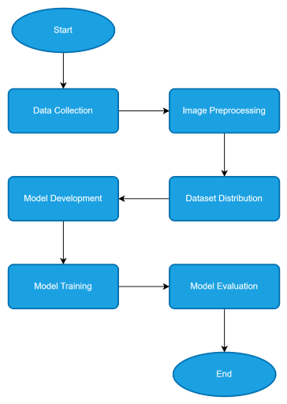
Dermatological conditions are among the most common health problems worldwide, where delayed identification may increase disease severity and complicate treatment procedures. However, restricted access to dermatological expertise and insufficient public awareness often contribute to delayed diagnosis. This study proposes a multi-class skin disease classification approach using deep learning and transfer learning architectures based on digital skin images. The dataset, obtained from the babaruzair/kaggle-skin-disease repository, consists of 1,157 images categorized into eight skin disease classes. Image preprocessing techniques, including resizing, normalization, and data augmentation, were applied to improve data quality and model generalization. Three models were evaluated in this study, namely a baseline Convolutional Neural Network (CNN), MobileNetV2, and EfficientNetB0. Both transfer learning models utilized ImageNet pre-trained weights, followed by customized classification layers and fine-tuning of selected upper layers. Model performance was evaluated using accuracy, precision, recall, F1-score, and confusion matrix analysis. Experimental results show that the baseline CNN achieved an accuracy of 52.36%, while MobileNetV2 and EfficientNetB0 achieved accuracies of 88.84% and 95.28%, respectively. The findings demonstrate that transfer learning architectures significantly outperform conventional CNN models for limited medical image datasets, with EfficientNetB0 providing the best classification performance. These results indicate the potential of deep learning-based approaches to support early skin disease diagnosis and assist clinical decision-making
Downloads