
Degradation of Balinese Kitchen Utensil Lexicon: An Ecolinguistics Perspective
Article Sidebar
- Balinese language, ecolinguistics, kitchen utensils, language degradation, lexicon extinction
Abstract
This study examined the degradation of the Balinese kitchen utensil lexicon
by analyzing its use across spatial and temporal dimensions in urban Denpasar. Data
were collected through documentation and a structured questionnaire administered to
respondents selected using a multi-stage clustered sampling technique, with Denpasar
identified as the primary research cluster. Participants were grouped by age into
adolescents (12–25 years), adults (26–45 years), and elderly individuals (46–65 years).
The analysis adopted an ecolinguistics framework that interpreted linguistic change
through three key parameters: environment, diversity, and interaction, interrelation, and
interdependence. A mixed qualitative–quantitative approach was employed to examine
patterns of lexical recognition and use across generations. The findings revealed that
the lexicon of Balinese kitchen utensils was largely retained among elderly respondents,
who demonstrated high levels of familiarity and practical experience. In contrast,
adolescents exhibited significant lexical degradation, as most were unfamiliar with the
terms and had not actively used them in everyday practice. This generational disparity
indicated an ongoing domain-specific language shift, driven by changes in domestic
practices and material environments in urban Balinese households.
Full text article
References
Arissusila, I. W. (2021). Degradasi Penggunaan Bahasa Bali Di Kota Denpasar. Vidya Wertta: Media Komunikasi Universitas Hindu, 4(1).
Aryani, N. K. (2019). Pergeseran Kosakata Bahasa Bali Pada Ranah Nelayan Di Kecamatan Karangasem. Ganaya : Jurnal Ilmu Sosial Dan Humaniora, 2(2).
https://jayapanguspress.penerbit.org/index.php/ganaya/article/view/358/346
Aryanta, I. K. A. (2019). Rayakan HUT ke-60, Sekaa Teruna Watugunung Jaga Tradisi dengan Lomba ‘Mebat’. Tribun Bali. https://asset.tribunnews.com/erIhiUSLoz6VGou-sSPLrf0vC0o=/1200x675/filters:upscale():quality(30):format(webp):focal(0.5x0.5:0.5x0.5)/bali/foto/bank/originals/lomba-mebat-sekaa-teruna.jpg
:quality(30):format(webp):focal(0.5x0.5:0.5x0.5)/bali/foto/bank/originals/lomba-mebat-sekaa-teruna.jpg)
Creswell, J. W., & Creswell, J. D. (2017). Research Design Qualitative, Quantitative, and Mixed Methods Approaches (5th ed.). SAGE Publications.
Dewi, V. M. (2021). Paon Pada Masyarakat Bali Di Kelurahan Puuduria Kecamatan Wonggeduku Kabupaten Konawe (1986-2019). Jurnal Penelitian Pendidikan Sejarah UHO, 6(3).
Fill, A., & Mühlhäusler, P. (2001). The Ecolinguistics Reader: Language, Ecology and Environment (A. Fill & P. Mühlhäusler (eds.)). Continuum.
Gaurifa, T. (2022). Language Choice Used by Balinese Young Generation in Sanur Beach. International Journal of Arts and Social Science, 5(11), 126–135. https://www.ijassjournal.com/2022/V5I11/414666194.pdf
Halliday, M. A. K. (2001). New Ways of Meaning: The Challenge to Applied Linguistics. In A. Fill & P. Mühlhäusler (Eds.), The Ecolinguistics Reader: Language, Ecology and Environment (pp. 175–202). Continuum.
Haugen, E. I. (1972). The Ecology of Language. In A. Fill & P. Mühlhäusler (Eds.), The ecolinguistics reader: Language, ecology and environment (pp. 57–66). Continuum.
Indrawati, N. L. K. M., Puspani, I. A. M., & Sukarini, N. W. (2024). Language attitude of Pedawa`s adolescents towards their native language. Linguistics and Culture Review, 8(1), 67–78. https://doi.org/10.21744/lingcure.v8n1.2304
Marlina, M. E., & Pasaribu, P. (2020). Memudarnya Penggunaan Bahasa Daerah di Kota Medan dalam Perspektif Antropologi. Buddayah: Jurnal Pendidikan Antropologi, 2(2). https://jurnal.unimed.ac.id/2012/index.php/bdh/article/download/22470/14989
Putra, I. G. A. C. S., Hikmaharyanti, P. D. A., & Nggus, Y. C. N. P. (2022). Pilihan Bahasa oleh Anak Muda Di Daerah Denpasar. Kajian Kritis Dalam Perkembangan Ilmu Linguistik Dan Sastra, 221–228. https://e-journal.unmas.ac.id/index.php/semnalisa/article/view/4722
Putra, P. A. W., & Yulianasari, A. A. A. S. R. (2020). PERUBAHAN PAON PADA RUMAH TRADISIONAL DI DESA BATUAN SUKAWATI. Jurnal Anala, 8(1), 35–44. https://doi.org/10.46650/anala.8.1.935.35-44
Putri, I. G. A. V. W., Putra, I. G. B. W. N., Bagus, I., & Yadnya, P. (2022). Pergeseran Ekoleksikon Nama Orang Bali: Studi Kasus Kajian Ekolinguistik. KEMBARA: Jurnal Keilmuan Bahasa, Sastra, Dan Pengajarannya, 8(2). https://doi.org/https://doi.org/10.22219/kembara.v8i2.21196
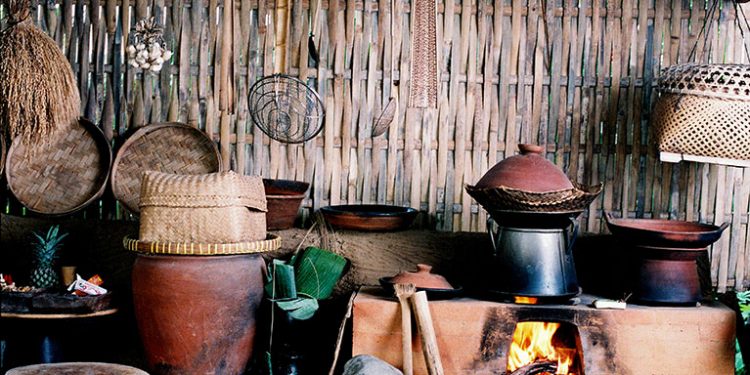
Reda. (2021). Berikut Ini Alasan Dibalik Sepulang Dari Berpergian harus Masuk Dapur [Photograph]. Balipustakanews. https://balipustakanews.com/wp-content/uploads/2021/02/paon-01-750x375.jpg
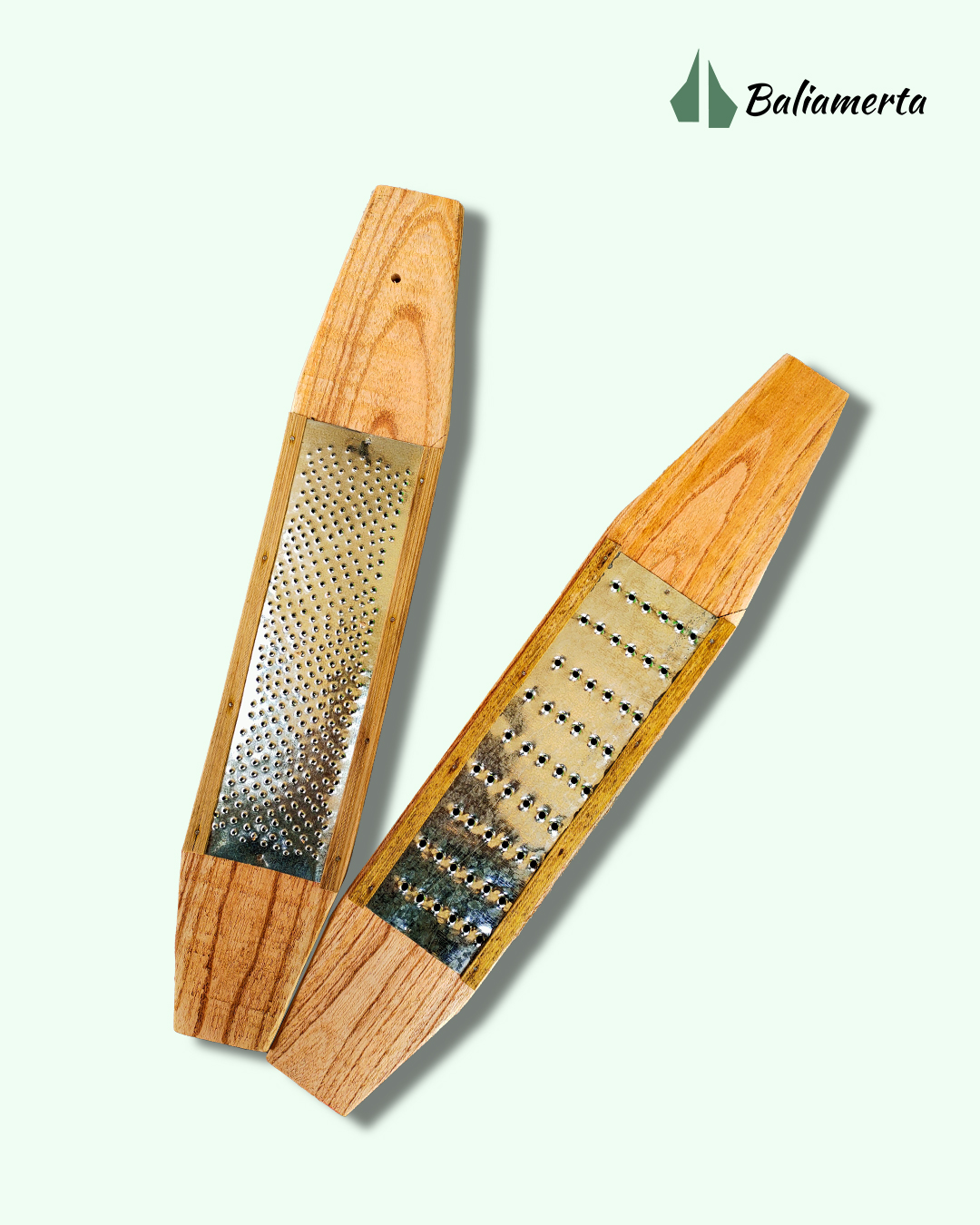
Reezuls. (2021). Balinese Traditional Coconut Grater. Baliamerta. https://baliamerta.com/wp-content/uploads/2022/01/parutan1.jpg
Samiaji, M. H. (2024). Rapor Merah: Bahasa Daerah di Indonesia Akan Punah! Badan Pengembangan Dan Pembinaan Bahasa, Kementerian Pendidikan Dasar Dan Menengah. https://badanbahasa.kemdikbud.go.id/artikel-detail/4160/rapor-merah:-bahasa-daerah-di-indonesia-akan-punah
Sharifian, F. (2017). Cultural Linguistics (Vol. 8). John Benjamins Publishing Company. https://doi.org/10.1075/clscc.8
Suwija, I. N., Darmada, I. M., & Mulyawan, I. N. R. (2019). Kumpulan Satua (Dongeng Rakyat Bali) (1st ed.). Pelawa Sari.
Terezawati, I. G. A. M. D., Mudana, I. W., & Putra Yasa, I. W. (2025). Implikasi Sosial Budaya Pergeseran Penggunaan Bahasa Ibu Pada Masyarakat Desa Adat Batulantang, Petang, Badung. JURNAL SYNTAX IMPERATIF : Jurnal Ilmu Sosial Dan Pendidikan, 6(2), 174–182. https://doi.org/10.54543/syntaximperatif.v6i2.691
Unknown. (2010). Bali Traditional House - part I. Bali Close-Up.
I9NNTqVkCunQLxYqB9zSrqBX0KR8RMEFn7JnZB7zcrCrLdS4OcHjTguilwJyO0c08r5MiqGAKfUabv7UOFHQ/s800/bali_house_09.gif
Unknown. (2024). Balinese Private Cooking Lesson – Experience with Lunch & Dinner. Wapa Di Ume.
https://wapadiumeubud.com/wp-content/uploads/2024/08/Private-Cooking-7.jpg

Widia, I. wayan, Arsana, I. G. K., Dhana, I. N., & Dharmika, I. B. (1984). Isi dan Kelengkapan Rumah Tangga Tradisional di Daerah Bali (S. Dakung (ed.)). Direktorat Sejarah dan Nilai Tradisional.
https://repositori.kemendikdasmen.go.id/13014/1/Isi dan kelengkapan rumah tangga tradisional daerah bali.pdf
Widrayani, B. (2024). Asta Kosala Kosali, Sebuah Konsep Tata Ruang Warisan Budaya Bali [Photograph]. Medium.
Authors
Copyright (c) 2026 A.A. Pt. Suari, Ni Ketut Sri Rahayuni

This work is licensed under a Creative Commons Attribution-ShareAlike 4.0 International License.